
10 Essential Factors to Consider When Designing and Building Cold Storage Facilities
Published on:
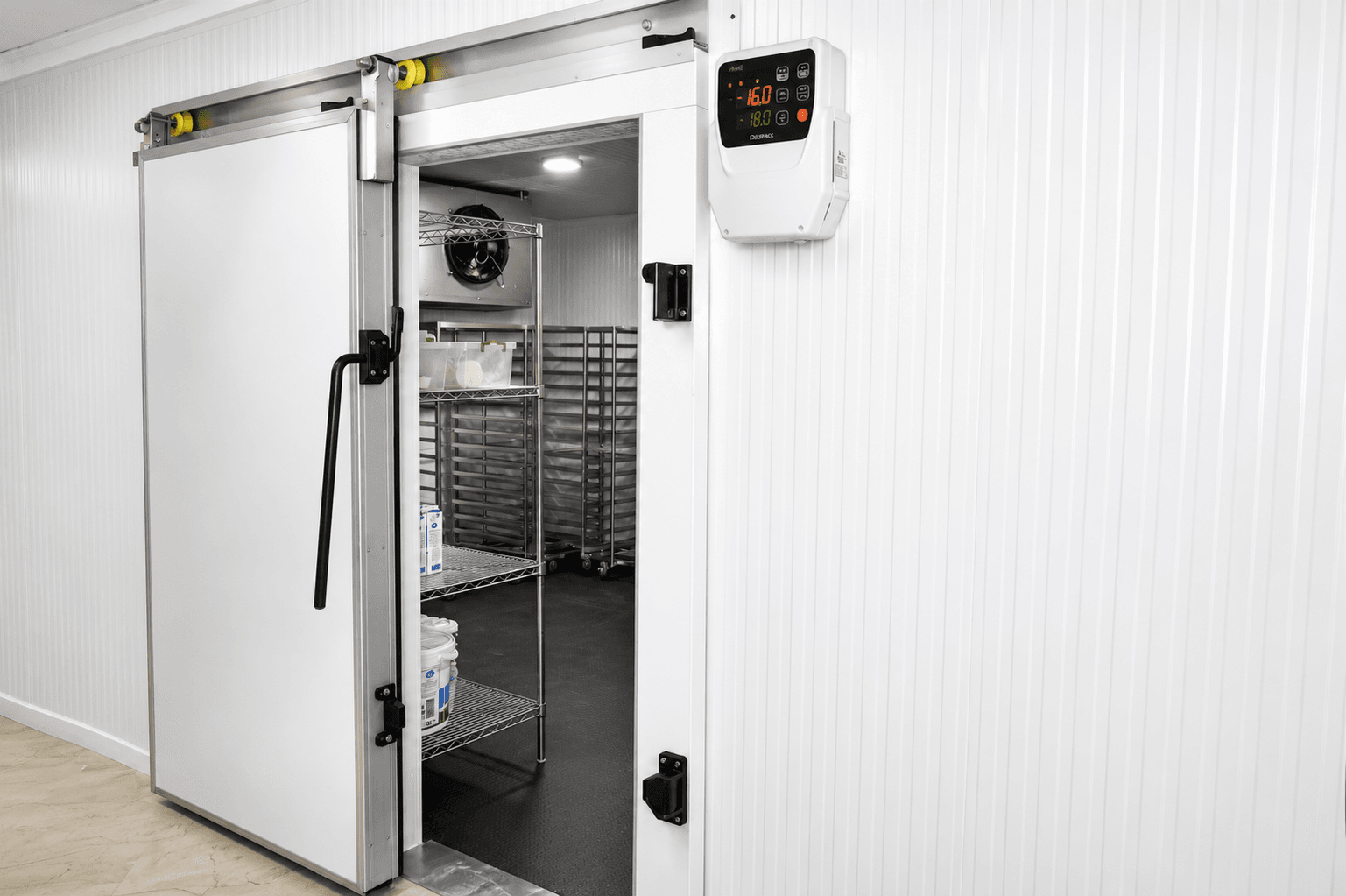
Planning a cold storage facility? Discover 10 essential factors for selecting insulated sandwich panels, refrigeration equipment, cold room doors, and energy-efficient solutions.
10 Essential Factors to Consider When Designing and Building Cold Storage Facilities
Cold storage facilities play a critical role in the food industry, agriculture, logistics, pharmaceuticals, and many other sectors where products must be stored under controlled temperature conditions.
A properly designed cold storage facility helps preserve product quality, optimize energy consumption, and reduce operating costs.
However, building a cold storage facility involves much more than installing insulated sandwich panels and refrigeration equipment. Reliable and efficient operation depends on several technical factors that must be considered during the design stage.
Here are 10 essential factors to consider when planning a cold storage project.
1. Selecting the Correct Storage Temperature
Storage temperature requirements depend on the type of product, storage duration, packaging, and applicable technical standards.
Typical examples include:
- Chilled storage rooms: Generally 0°C to +5°C. - Frozen storage rooms: Generally -18°C or below. - Blast freezing facilities: Air temperatures may range approximately from -35°C to -40°C, depending on the freezing process.
These temperatures are general examples. Actual operating conditions must be determined according to the specific product and its storage requirements.
2. Calculating Storage Capacity and Facility Dimensions
Cold storage design should consider more than the total floor area.
Important factors include:
- Product quantity and weight. - Pallet dimensions and racking systems. - Storage height. - Forklift access and movement areas. - Loading and unloading frequency. - Future expansion requirements.
Proper planning helps maximize usable storage space and improve warehouse operations.
3. Choosing the Correct Sandwich Panel Thickness
Insulated sandwich panels are essential components of cold storage construction.
They help reduce heat transfer and maintain the required temperature inside the facility.
Under the KÄLTELUX brand, polyurethane-insulated sandwich panels are manufactured in thicknesses ranging from 60 mm to 200 mm.
Panel thickness should be selected according to:
- Internal storage temperature. - External ambient conditions. - Facility application. - Energy efficiency requirements. - Structural and operational considerations.
For example, 120 mm panels may be suitable for certain frozen storage applications operating at -18°C.
However, the final thickness must always be determined through appropriate thermal calculations.
4. Advantages of Interlocking Sandwich Panel Systems
Proper sealing of panel joints is essential for maintaining the thermal performance of cold storage facilities.
Interlocking sandwich panel systems provide secure and controlled connections between panels.
Key advantages include:
- Reliable panel connections. - Reduced risk of air leakage when correctly installed. - Convenient installation. - Durable construction. - Potential for dismantling and reinstallation under suitable technical conditions.
Correct application of gaskets, sealants, and vapor barriers is also essential.
5. Correct Refrigeration Capacity Calculation
Selecting refrigeration equipment based only on room volume is a common mistake.
A proper refrigeration load calculation should consider:
- Quantity of incoming products. - Initial product temperature. - Required storage temperature. - Daily product turnover. - Frequency of door openings. - Outdoor ambient temperature. - Heat transfer through walls, ceilings, and floors. - Heat generated by lighting, personnel, and equipment.
Incorrect equipment sizing can lead to excessive energy consumption, temperature fluctuations, and unnecessary equipment wear.
6. Selecting the Right Cold Storage Doors
Cold storage doors are important elements of the facility's insulated enclosure.
Depending on the application, different types of doors may be used:
- Sliding cold storage doors. - Hinged cold room doors. - Double-leaf doors.
Door selection should consider opening dimensions, forklift traffic, frequency of use, temperature differences, and airtightness requirements.
For frozen storage facilities, door frame heating systems may be required to prevent ice formation.
7. Humidity Control and Air Circulation
Temperature control alone is not sufficient for certain products, particularly fruits and vegetables.
Maintaining appropriate relative humidity helps reduce moisture loss and preserve product quality.
For apple storage and other agricultural applications, temperature, humidity, air circulation, and, where necessary, atmospheric conditions must be evaluated together.
Ultrasonic humidification systems may be incorporated into suitable projects.
8. Energy Efficiency
Industrial refrigeration systems operate for extended periods, making energy consumption a major factor in operating costs.
Important measures for improving energy efficiency include:
- High-quality thermal insulation. - Proper refrigeration equipment sizing. - Airtight cold storage doors. - Efficient control and automation systems. - Regular preventive maintenance.
Energy efficiency should be considered from the earliest stages of facility design.
9. Professional Installation and Commissioning
Even high-quality equipment cannot guarantee reliable performance without proper installation.
Special attention should be given to:
- Sandwich panel joints. - Floor insulation. - Vapor barrier installation. - Refrigeration piping. - Electrical connections. - Control and automation settings. - Verification of operating parameters.
Before handing over the facility to the customer, appropriate commissioning procedures and system tests must be completed.
10. Technical Service and Preventive Maintenance
Regular maintenance helps prevent unexpected failures and supports reliable refrigeration system operation.
Compressors, condensers, evaporators, control systems, cold storage doors, and other components should be inspected according to an established maintenance schedule.
For large industrial cold storage facilities, professional technical support is particularly important because equipment downtime may result in significant product losses.
CTZ Group — Turnkey Cold Storage Solutions in Kazakhstan
CTZ Group provides comprehensive solutions for industrial cold storage and freezing facilities throughout Kazakhstan.
Our services include:
- Free initial project consultation and assessment. - Cold storage facility design. - Manufacturing of KÄLTELUX polyurethane-insulated sandwich panels. - Manufacturing of industrial cold storage doors. - Refrigeration equipment selection and supply. - Professional installation and commissioning. - Technical service and maintenance.
We develop reliable and efficient solutions for food processing, agriculture, logistics, and industrial facilities.
Planning a new cold storage or freezing facility?
Contact the CTZ Group team for a free initial consultation and a customized quotation for your project.
CTZ GROUP
www.ctzgroup.kz Email: sales@ctzgroup.kz Phone: +7 (776) 225-62-04